


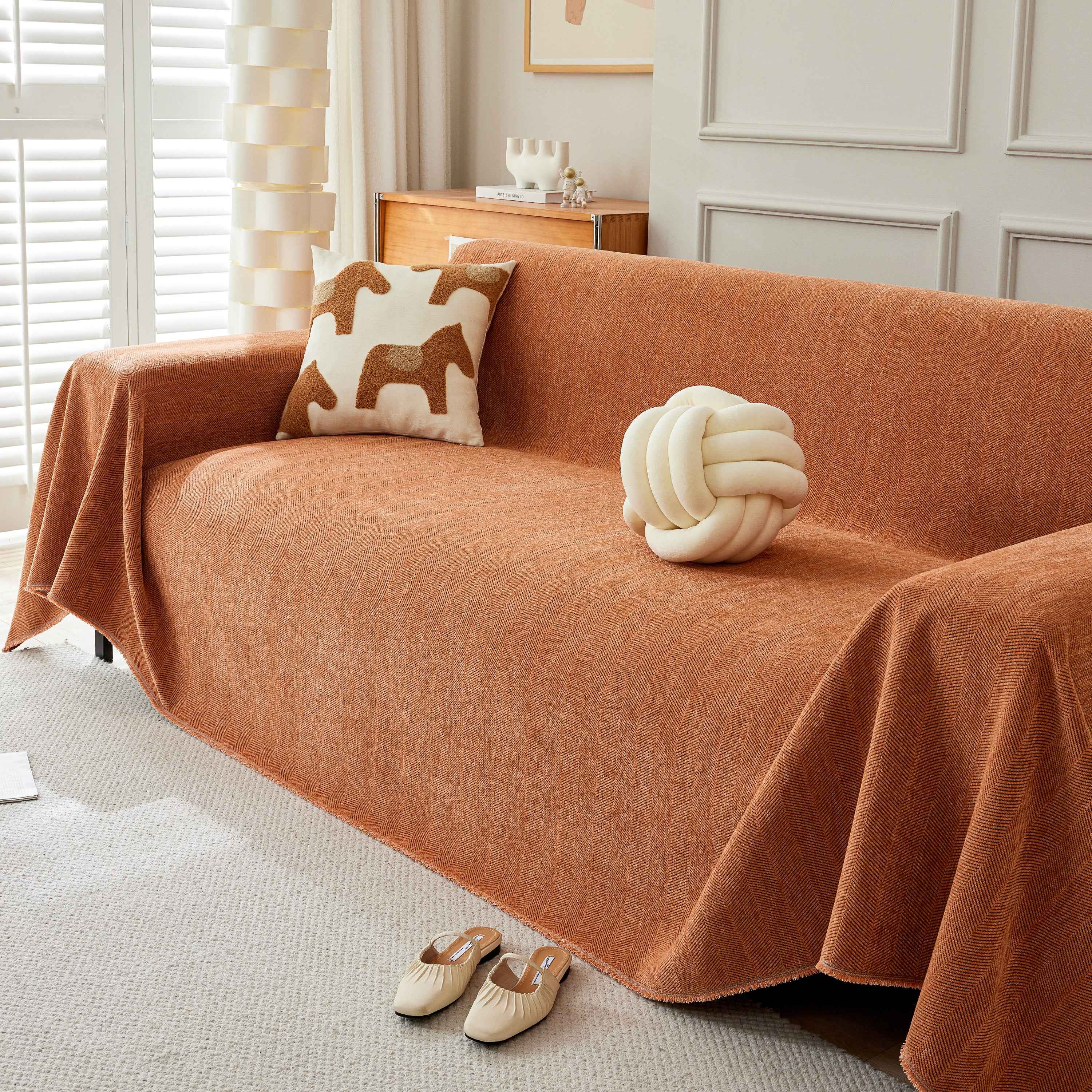




How to Measure Your Sofa for a Perfect-Fitting Cover
Introduction
There's nothing more frustrating than unboxing a new sofa covers, only to find it's too tight in some places and baggy in others. A poorly fitting cover not only looks unattractive but also fails to provide adequate protection for your furniture. The difference between a "good enough" fit and a "perfect" fit comes down to one crucial step: accurate measuring.
Many people guess their sofa's size or rely on generic labels like "three-seater," but sofas vary dramatically even within these categories. This comprehensive guide will transform you into a measuring expert, ensuring the couch covers you order fits like it was tailor-made for your furniture. We'll cover everything from basic measurements to tricky sectional sofas and recliners.

Essential Tools and Preparation
Before you begin, gather these simple tools:
-
A flexible measuring tape (a metal one is best)
-
A notebook and pen
-
A smartphone or camera
Preparation Steps:
-
Clear the Area: Remove all cushions, throws, and pillows from your sofa.
-
Create Space: Pull the sofa away from the wall if possible to access all sides.
-
Take Photos: Snap pictures of your sofa from the front, side, and back. This provides a visual reference that can be invaluable when choosing between cover styles or contacting customer service.
The 8 Essential Measurements for a Standard Sofa
Take each measurement twice to ensure accuracy. Record all dimensions in both inches and centimeters.
-
Overall Width (A): Measure from the very outer edge of the left arm to the very outer edge of the right arm. This is the most important measurement.
-
Overall Depth (B): Measure from the very front of the seat cushions to the very back of the sofa back.
-
Overall Height (C): Measure from the floor to the very top of the sofa back.
-
Seat Cushion Width (D): Measure the width of a single seat cushion. If cushions are attached, measure the total seat width and divide by the number of cushions.
-
Seat Cushion Depth (E): Measure from the front to the back of a single seat cushion.
-
Seat Cushion Height (F): Measure the thickness of the cushion.
-
Inside Arm Height (G): Measure from the seat cushion up to the top of the arm inside.
-
Back Height (H): Measure from the seat cushion up to the top of the sofa back.
Pro Tip: When recording, note whether your cushions are attached (fixed to the sofa frame) or loose (removable), as this affects cover design.
Special Cases: Sectionals, Recliners, and Sleeper Sofas
Measuring an L-Shaped Sectional:
Treat each section as a separate sofa.
-
Measure the width and depth of the chaise lounge section.
-
Measure the width and depth of the corner section.
-
Measure the width and depth of the armless section.
-
Note where the sections connect.
- Need Washable Strech Couch Cover for Sectional? Click here

Measuring a Sofa with a Recliner:
-
Take all standard measurements with the recliner in the closed position.
-
Crucially, measure from the back of the sofa to the front of the footrest when fully extended.
-
Check if the cover needs special openings for recliner mechanisms.
- Need the sofa covers for reclining couch? Click here!


Sleeper Sofas:
-
Follow standard measuring guidelines.
-
Ensure the cover is compatible with the sleeper mechanism and doesn't obstruct its operation.
Understanding Fit Types: Stretch vs. Loose-Fit
Your measurements will determine which type of cover is best for your sofa.
For Stretch Sofa Covers:
-
These are designed to be form-fitting.
-
They require precise measurements but are more forgiving of slight variations due to their elasticity.
-
Ideal for modern sofas with clean lines.


For Loose-Fit Slipcovers or Throws and Blankets Sofacovers:
-
These require exact measurements for a proper drape.
-
Typically need more length and width for tucking and folding.
-
Better for traditional sofas where you want a draped, furniture-protector look.


Common Measuring Mistakes to Avoid
-
Guessing Instead of Measuring: Never estimate based on what you "think" the size might be.
-
Not Accounting for Pillow Top Cushions: If your cushions have a pillow-top design, measure at the widest, fullest point.
-
Ignoring Arm Style: T-shaped arms, roll arms, and square arms all require different cover designs. Note your arm style when ordering.
-
Forgetting to Measure Doorways: If you're replacing both sofa and cover, ensure your new setup can fit through your doorways.
Creating Your Measurement Checklist
Organize your measurements like this:
[ ] Overall Width: ___ cm
[ ] Overall Depth: ___ cm
[ ] Overall Height: ___ cm
[ ] Seat Cushion Width: ___ cm
[ ] Seat Cushion Depth: ___ cm
[ ] Seat Cushion Height: ___ cm
[ ] Arm Style: _______________
[ ] Special Features: Recliner □ Sectional □ Sleeper □
Conclusion: Measure Twice, Order Once
Taking 10 minutes to measure properly can save you hours of hassle with returns and exchanges. A perfectly fitted sofa cover not only looks professional and attractive but also stays securely in place, providing optimal protection for your furniture. With these professional techniques, you can shop for sofa covers with complete confidence, knowing exactly what size you need for your specific sofa model.
The TaroTextile Journal: Tips & Stories

Refresh Your Home This Spring: The Best Sofa Covers for a Seasonal Makeover


Refresh Your Home This Spring: The Best Sofa Covers for a Seasonal Makeover
How to Make Your Sofa Last Longer with the Right Cover


How to Make Your Sofa Last Longer with the Right Cover
Budget-Friendly Sofa Covers That Don’t Sacrifice Style in 2026


Budget-Friendly Sofa Covers That Don’t Sacrifice Style in 2026
The Ultimate Guide to Choosing Sofa Covers for Small Apartments in 2026


The Ultimate Guide to Choosing Sofa Covers for Small Apartments in 2026
How to Maintain Your Sofa Covers: Cleaning Tips for Long-Lasting Comfort


How to Maintain Your Sofa Covers: Cleaning Tips for Long-Lasting Comfort
Sofa Covers for Renters: The Best Solution to Protect Your Furniture


Sofa Covers for Renters: The Best Solution to Protect Your Furniture
Transform Your Space with These 10 Sofa Cover Styles for 2026


Transform Your Space with These 10 Sofa Cover Styles for 2026
How to Choose the Perfect Sofa Cover for Pet Owners in 2026


How to Choose the Perfect Sofa Cover for Pet Owners in 2026
2026 Trends in Sofa Covers: What's Hot for Your Living Room?


2026 Trends in Sofa Covers: What's Hot for Your Living Room?
The Rental Revolution: Transforming Temporary Spaces with Removable Sofa Covers


The Rental Revolution: Transforming Temporary Spaces with Removable Sofa Covers
Pet-Friendly Sophistication: Protecting Your Furniture Without Sacrificing Style


Pet-Friendly Sophistication: Protecting Your Furniture Without Sacrificing Style
Sofa Throws Blankets


- Choosing a selection results in a full page refresh.
