






Best Sofa Cover Colors for 2026: 12 Colors to Refresh Your Living Room
Choosing a new sofa cover is one of the easiest ways to change the mood of a living room without buying a completely new sofa. But with so many colors available, deciding which shade will still look good months from now can be surprisingly difficult.
For 2026, living room design is moving toward warmer neutrals, earthy tones, richer accent colors, and more personal interiors. Instead of perfectly matched rooms, homeowners are increasingly mixing comfortable textures, natural-looking colors, and pieces that feel lived-in.
That makes sofa cover color more important than ever.
The right color can make a small room feel brighter, make a large living room feel cozier, or give an older sofa an entirely different personality. It can also help hide everyday signs of use—something worth considering if you have children or pets.
So, what are the best sofa cover colors for 2026?
Below are 12 colors worth considering, along with practical tips for choosing the right shade for your sofa, room size, lifestyle, and existing decor.
What Sofa Cover Colors Are Trending in 2026?
Before choosing a specific color, it helps to understand the bigger design direction.
In 2026, living rooms are moving away from overly cool, uniform interiors. Warm neutrals, earthy colors, soft greens, natural browns, and deeper accent shades are becoming increasingly popular.
At the same time, homeowners are looking for spaces that feel comfortable rather than overly staged.
This is good news for sofa covers.
Instead of replacing an entire sofa, you can use a new cover to introduce a different color while keeping the furniture you already own.
Whether you prefer a calm neutral room or a bolder statement, there is a 2026 sofa cover color that can work for your space.
1. Warm Beige
Warm beige is one of the safest choices for a modern living room.
Unlike cooler beige or gray-beige shades, warm beige has subtle yellow, cream, or sandy undertones. It creates a softer atmosphere without making the room feel too dark.
A warm beige sofa cover works especially well with:
- Cream walls
- Light wood furniture
- Natural rugs
- Woven baskets
- Green plants
It is also a practical choice if you want a sofa color that will remain versatile as your decorating style changes.
For a timeless look, consider a Chenille Sofa Cover in a warm neutral tone.
2. Soft Cream
Cream is another excellent choice for homeowners who want a bright, relaxed living room.
A cream sofa cover can make furniture feel visually lighter, particularly in smaller rooms.
It works well with:
- White walls
- Natural wood
- Beige rugs
- Soft brown accents
- Minimalist interiors
The downside is obvious: lighter colors tend to show stains more easily.
If you have children or pets, look for a removable and washable sofa cover and check the care instructions before purchasing.
3. Mocha Brown
Brown is having a strong moment in interior design, and mocha is one of the most approachable versions.
A mocha sofa cover adds warmth without the heaviness of very dark brown furniture.
It pairs naturally with:
- Cream
- Tan
- Terracotta
- Brass
- Natural wood
This color is particularly effective if you want your living room to feel cozy and grounded.
It can also be a practical choice for busy households because medium-to-dark brown tends to be more forgiving of everyday marks than very light upholstery.
4. Chocolate Brown
If you want something deeper and more dramatic, consider chocolate brown.
A chocolate brown sofa can become the visual anchor of a room, especially when surrounded by lighter walls and flooring.
Try combining it with:
- Warm white
- Caramel
- Cream
- Olive green
- Brass accents
Chocolate brown works particularly well with textured fabrics. A textured sofa slipcover can soften the visual weight of a darker color while adding interest.
5. Olive Green
Olive green is a strong option for homeowners who want to bring a natural feeling indoors.
It is more muted than emerald and less predictable than beige, making it a good middle ground between neutral and statement color.
Olive green pairs beautifully with:
- Cream
- Warm beige
- Brown
- Wood
- Black accents
If your room already contains plants or natural materials, an olive sofa cover can help connect the different elements visually.
6. Sage Green
For a lighter alternative to olive, sage green offers a softer appearance.
Sage works particularly well in rooms designed around calm, natural colors.
It can complement:
- Light oak
- White
- Cream
- Natural linen
- Soft gray
A sage sofa cover can also work nicely in smaller rooms because the color is noticeable without being visually overwhelming.
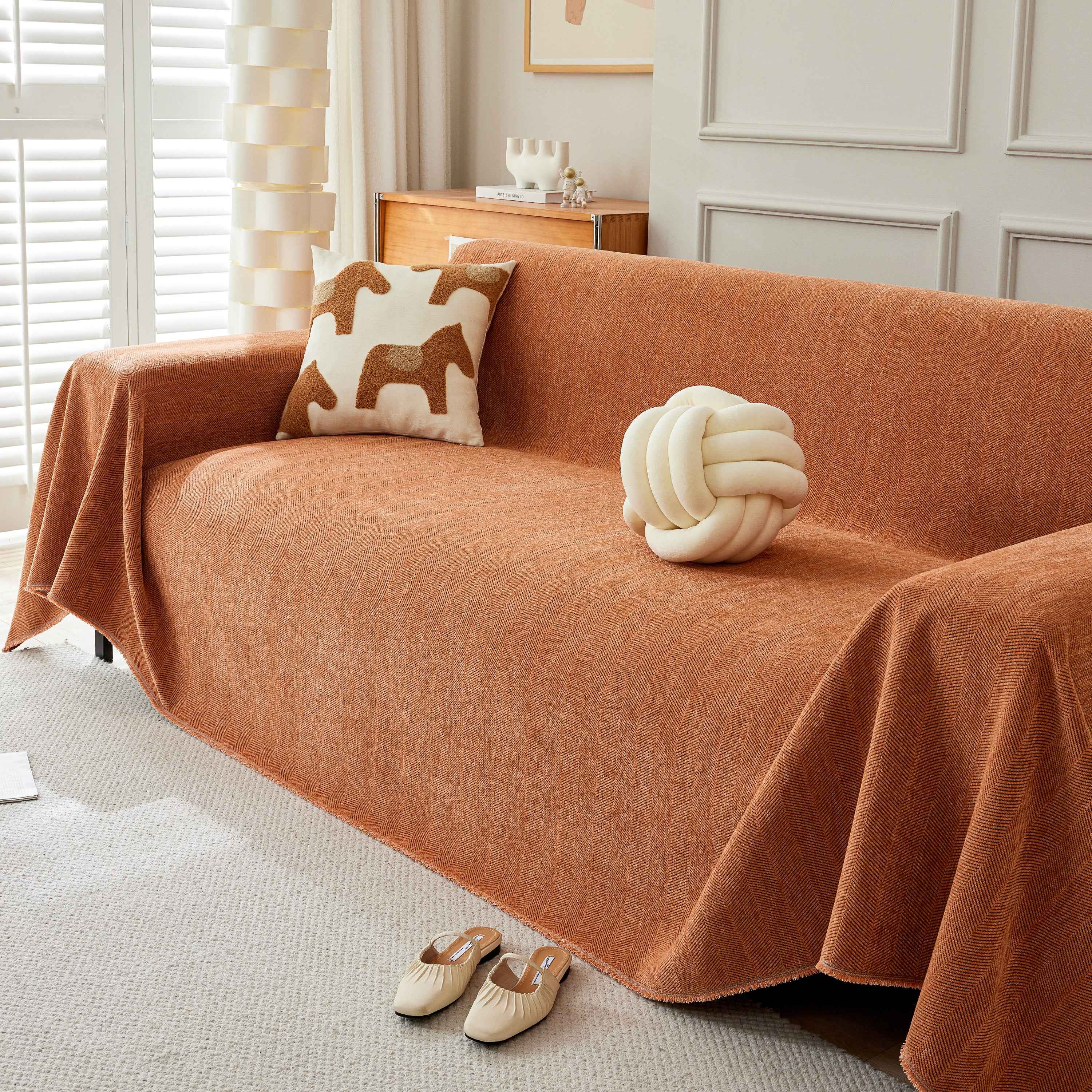
7. Terracotta
Terracotta brings warmth and personality to a living room.
Inspired by clay, brick, and natural earth tones, it works especially well in homes with warm wood furniture and neutral walls.
You can balance terracotta with:
- Cream
- Beige
- Warm gray
- Brown
- Olive green
If you want your sofa to become a design feature rather than simply blend into the room, terracotta is worth considering.
8. Rust
Rust is slightly deeper and more dramatic than terracotta.
It can create a warm, comfortable feeling that works especially well during fall and winter, but it does not have to be limited to seasonal decorating.
Pair a rust sofa cover with:
- Cream walls
- Dark wood
- Olive green
- Tan leather accents
- Woven textures
Because rust is more noticeable than a neutral color, consider using simpler patterns and accessories around the sofa.
9. Navy Blue
Navy remains a reliable choice for homeowners who want a darker color without going completely black.
It provides contrast while remaining relatively easy to coordinate with other colors.
Navy sofa covers work particularly well with:
- White
- Cream
- Gray
- Brown
- Brass
- Light wood
If your living room already has neutral walls, a navy sofa can add depth without requiring a complete redesign.
10. Deep Burgundy
For homeowners who want something more expressive, burgundy can create a rich and sophisticated atmosphere.
It works particularly well with traditional, modern, and vintage-inspired interiors.
Try combining burgundy with:
- Cream
- Dark brown
- Brass
- Walnut wood
- Muted green
Because burgundy is a strong color, it is usually best to let the sofa remain the main statement piece.
11. Charcoal Gray
Gray is not disappearing in 2026, but warmer and more layered versions are becoming more appealing than cold, flat gray.
Charcoal is especially useful if you want a darker neutral that can work with almost any decorating style.
It pairs well with:
- White
- Cream
- Warm beige
- Natural wood
- Black metal
Charcoal can also be practical for high-traffic rooms, although the exact appearance of dirt and pet hair will depend on the fabric and color.
If your home includes dogs or cats, consider exploring Pet Friendly Sofa Covers designed with everyday household use in mind.
12. Dusty Blue
Dusty blue offers a softer alternative to navy.
It brings color into a room without making the sofa dominate the entire space.
This shade works particularly well with:
- Cream
- Light wood
- Beige
- Soft gray
- Natural textures
For coastal, Scandinavian, or relaxed contemporary interiors, dusty blue can be an especially versatile choice.
The TaroTextile Journal: Tips & Stories

Refresh Your Home This Spring: The Best Sofa Covers for a Seasonal Makeover


Refresh Your Home This Spring: The Best Sofa Covers for a Seasonal Makeover
How to Make Your Sofa Last Longer with the Right Cover


How to Make Your Sofa Last Longer with the Right Cover
Budget-Friendly Sofa Covers That Don’t Sacrifice Style in 2026


Budget-Friendly Sofa Covers That Don’t Sacrifice Style in 2026
The Ultimate Guide to Choosing Sofa Covers for Small Apartments in 2026


The Ultimate Guide to Choosing Sofa Covers for Small Apartments in 2026
How to Maintain Your Sofa Covers: Cleaning Tips for Long-Lasting Comfort


How to Maintain Your Sofa Covers: Cleaning Tips for Long-Lasting Comfort
Sofa Covers for Renters: The Best Solution to Protect Your Furniture


Sofa Covers for Renters: The Best Solution to Protect Your Furniture
Transform Your Space with These 10 Sofa Cover Styles for 2026


Transform Your Space with These 10 Sofa Cover Styles for 2026
How to Choose the Perfect Sofa Cover for Pet Owners in 2026


How to Choose the Perfect Sofa Cover for Pet Owners in 2026
2026 Trends in Sofa Covers: What's Hot for Your Living Room?


2026 Trends in Sofa Covers: What's Hot for Your Living Room?
The Rental Revolution: Transforming Temporary Spaces with Removable Sofa Covers


The Rental Revolution: Transforming Temporary Spaces with Removable Sofa Covers
Pet-Friendly Sophistication: Protecting Your Furniture Without Sacrificing Style


Pet-Friendly Sophistication: Protecting Your Furniture Without Sacrificing Style
Sofa Throws Blankets


- Choosing a selection results in a full page refresh.
